


Dwarf Lisianthus
Overview:
Lisianthus are one of the deserts best-kept secrets! These flowers take the heat, and will actually last a few years with proper care. Dwarf lisianthus are relatively new to the market, and they are coming out with better and better varieties every year.
Adventure Level
2/5
Starting seeds:
If if you are feeling adventurous, start them inside under a grow light sometime in between September and Christmas. The are slow to start and usually have a 50-60% germination rate. surface sow two seeds per cell and lightly top with fine vermiculite. These seeds are prone to damping off so make sure that they get good airflow post-germination. Seeds can take 14-21 days to germinate, and another 50-60 days to be able to transplant outside.
When to plant outdoors:
You can plant lisianthus any time of the year, but I recommend either planting in the fall or the spring. Fall-planted lisianthus will bloom the following summer. Spring-planted lisianthus will bloom the same summer as well, typically 2-4 weeks after the fall planted or perennialized lisianthus. Lisianthus like to get established when soil temperatures are still below 70 degrees, so don’t wait for too long to plant them in the spring.
Pinching:
Pinch the center growth of the plant when it starts to elongate. This will allow the plant to send up side shoots so you can get 3-5 bloom stalks per plant. I usually pinch my plants 1-4 weeks after planting depending on the plug.
Spacing:
3-4” apart
Sun:
Full sun, 8+
Water:
Lisianthus like consistent moisture. Make sure they dry out between watering to avoid root rot. When watering try not to get the foliage wet. Containers are watered 2x per day when temperatures are above 105. In-ground they are watered every day.
Flower Support:
not needed for dwarf varieties
Fertilizing:
Lisianthus are heavy feeders, feed them consistently with a weekly liquid fertilizer. In the summer we are watering plants a lot more and nutrients get leached out of the soil more quickly. This means that we need to be applying fertilizer on a more consistent basis to make up for the constant leaching.
Succession plant?
I do not typically plant many successions. I like to plant all my dwarf lisianthus in March and April.
Post-summer care:
After the summer the plants can be cut back and left alone. Trim back any dead or diseased stems and keep an eye on it throughout the winter. Make sure that they aren’t getting too much water during this time as they can be susceptible to rot. Once you see new growth emerging in late February / early March, give it a good feeding and wait for them to green up.
Sourcing:
We sell + ship lisianthus seeds on our online store as well as plugs every spring in March & April.
Favorite Varieties:
Florida
Florida series of Lisianthus are one of the first dwarf varieties on the market. They are the tallest of the dwarf varieties typically growing 6-10" in height. They are a single petal series that produce a ton of blooms per plant. This is one of the most vigorous dwarf varieties we grow, and thus we add it to the line up each year. They come in pink and silver as well.


Julietta series:
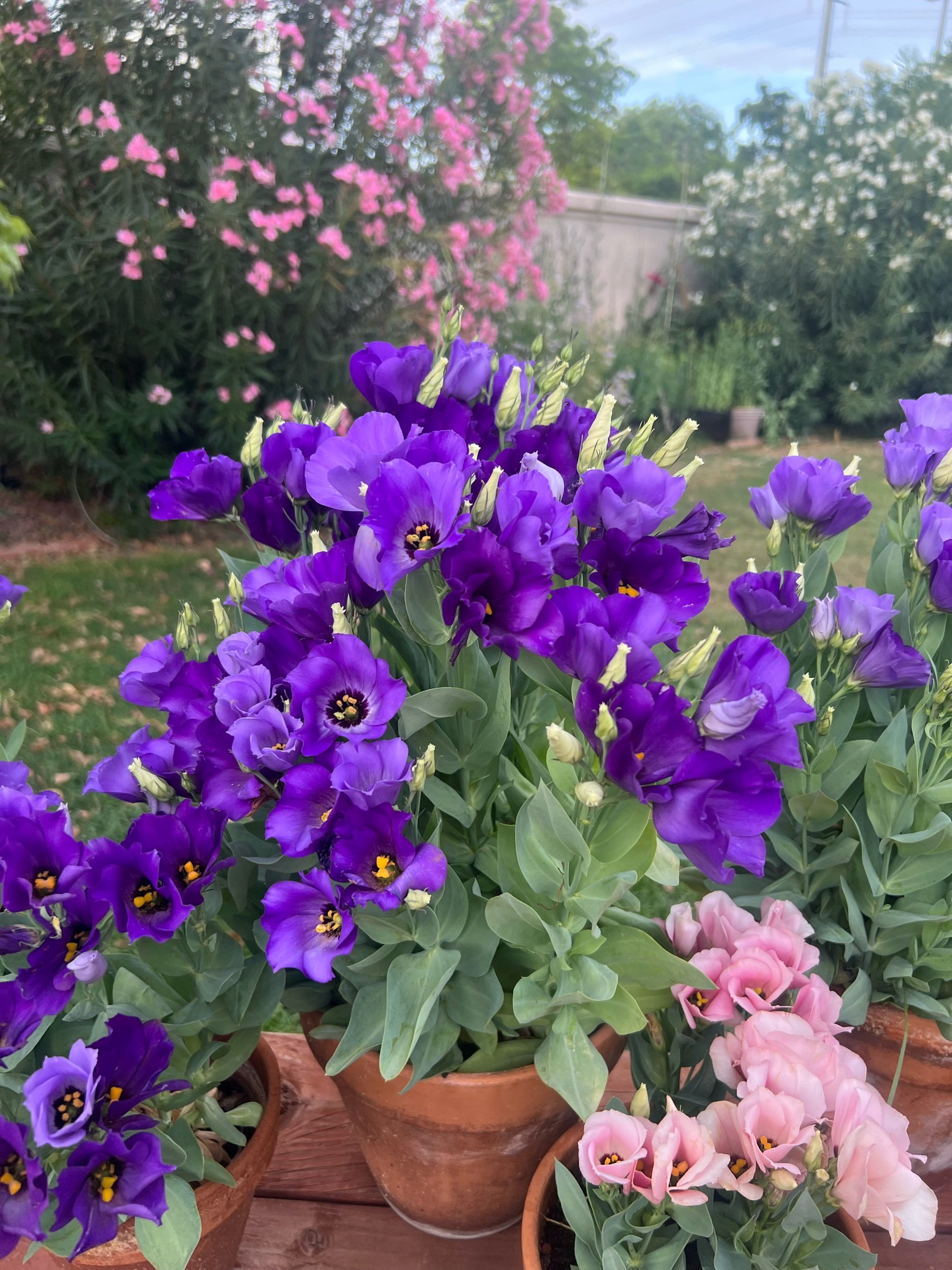
Julietta is the shortest and most compact series that we grow topping out at 4-5" tall. We grew the Julietta 'pink' and 'blue' and they come in white as well. The blue has slightly smaller flowers that seem to have more petals in each flower than the pink.


Carmen series:

as you can see, the one on the left is much lighter in color, 'bleached' by the sun if you will. Both still lovely to have in the garden.

Lisianthus camen is slight taller than the julietta series, but not as tall as the Florida. series. They typically stay around 6" tall in my containers.

Mix of carmen 'rose' julietta 'blue' and Florida 'blue' lisianthus
Overview:
Dwarf lisianthus are such a treat in the summer container garden. They are a dwarf plant, that deserve all the spot light. We like to highlight them individually, as sometimes they can get taken over by more vigorous flowers in containers or in the garden. They are perfect for any hot climate garden, and can perennialize if you let them.


