


Rudbeckia aka ‘Black eye Susan’
Overview:
Rudbeckia is a classic summer flower, fit for any cottage garden. They do well in containers or in the ground. These flowers are in the sunflower family, which comes as no surprise, as their daisy-like blooms resemble the structure of the sunflower. Rudbeckias come in all sorts of colors and sizes nowadays. They make an excellent cut flower, and florist swoon over their blooms.
Here in the low desert of Arizona, we like to grow the annual Rudbeckia Hirta. They are a short lived perennial and can last several years in the garden. They are prolific self-seeders, so you may see them pop up across your landscape.
If you live in colder areas zone 3-8 you can try growing the perennial Rudbeckia fulgida. This is the classic black-eye Susan, with yellow petals and black centers.
Seed starting:
Starting seeds for Rudbeckia is relatively easy. I usually sow 1-2 seeds per cell and thin to one per cell after germination. We surface sow the seeds ( spring seeds on top of soil) followed by a light spring of seed starting mix & vermiculite after sowing.
Rudbeckia are ‘cool season’ flowers meaning they like to germinate and get established under cooler conditions. After sowing, we will wrap the tray in cellophane, and place it in our fridge for 2 weeks. This cool period will aid in germination, and help seeds grow. If you don’t have access to a cooler space for a tray, you can place your seed packet in the cooler for the 2-week time frame before sowing.
Germination occurs typically after 7-14 days after removing the seedling tray from fridge. Check out my seed starting guide for more tips and tricks for indoor seed starting. Start seeds indoors in August-October.
When to plant outdoors:
October-March in zone 9 & up
Early sping through summer in zones 8 & lower
Spacing:
9 - 12” apart
Height:
12-24”
Sun:
Full sun 6-8+ hours
Flower Support:
You can use Peony cages or Hortonova netting for taller varieties (24’+)
Fertilizing:
feed plants with low dosages of all-purpose fertilizer best blooms. They don’t need a lot, as they are native wildflowers.
Typical bloom time:
Late May - Summer here in Zone 9
July - September in colder zones
Pairing plants:
Marigolds, Zinnias, cosmos, yarrow, dahlias, stative, feverfew & more
Favorite varieties:
Rudbeckia Hirta:

rudbeckia Hirta ‘ Cherokee sunset’ beautiful flower mix with more autumnal fall notes. Mix is full of single, and double flowering blooms.

Mix of seasonal flowers like marigolds, alyssum and salvia make a great pairing with the rudbeckia.


Rudbeckia ‘Sahara’ is a beautiful more mauve blush color Rudbeckia. Flowers are a mix of colors in this color pallet. Range of single to double flowers. Florist favorite for sure!

Rudbeckia ‘Toto Rustic’ is a great addition to any summer garden. Their petals are bi-color with gold and rust. Excellent pairing with the purple fountain grass.

Rudbeckia ‘Cappichino' paired with a 'tomato soup' echinacea for a stunning sunset combo. Picture taken in a zone 6b garden (above) 
More ‘Cherokee sunset’ rudbeckia, this time these are double! Beautiful rusty brown color.
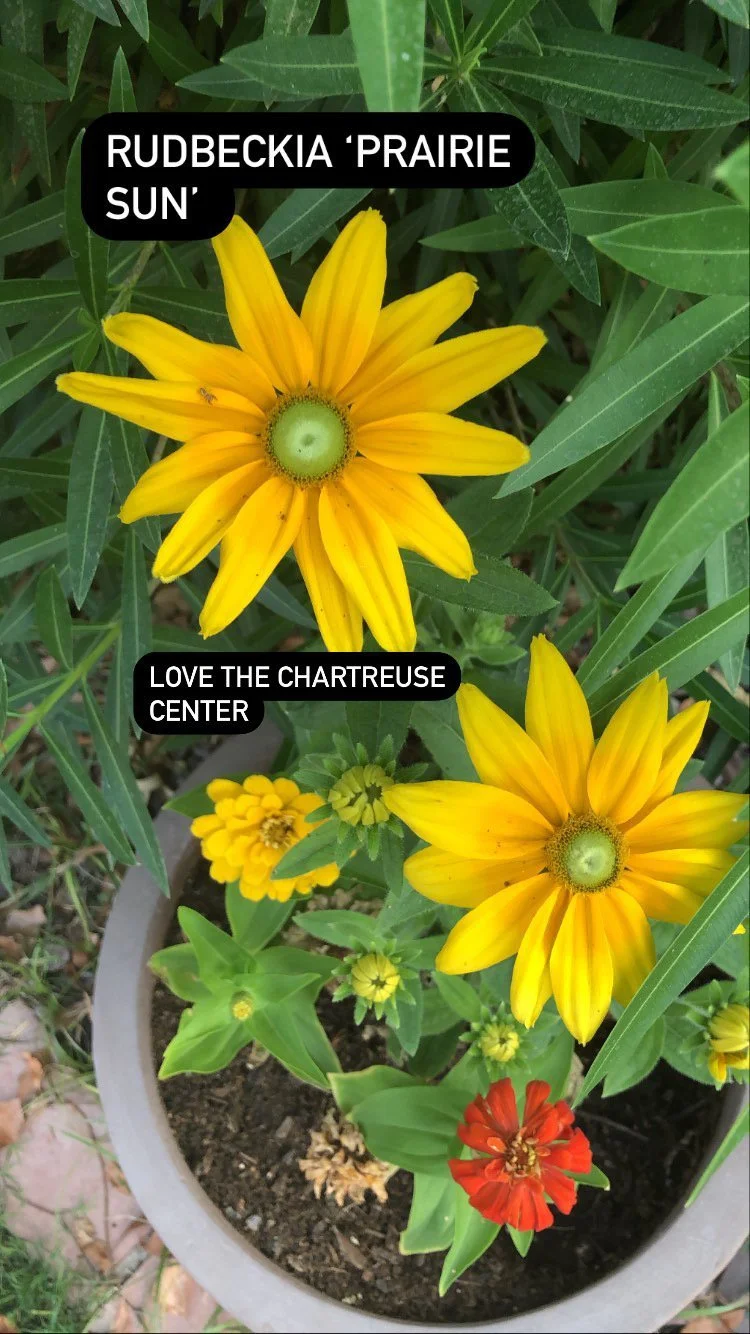
This one is a cool one, because it doesn’t have a black center, it’s green! Rudbeckia ‘Irish eyes’ is a great choice for a more spring pallet. Rudbeckia are typically bloom early here in Zone 9, so this could be a great option to pair with your late spring/ early summer bloomers like zinnias, feverfew, and yarro

Rudbeckia 'amarillo gold' is similar in color to the 'prarie sun' but offers a compact habit, perfect for the container garden. We have them planted in a 10" container in the garden.

Topping out at 10-14" tall, they make a great paring with celoisas, zinnias, angleonias, lisianthus and more!
Overall, rudbeckias are a great plant to have in the landscape and use as a cut flower. they offer a whimsical vibe in the late spring and early summer garden here in zone 9b. They are a great short lived perennial that is perfect for any beginner gardener. Plant when soil tempatures are still cool, so plants can get established before the heat.


